Starting solids is one of the most exciting — and nerve-wracking — milestones in your baby's first year. The World Health Organization and Indian Academy of Pediatrics both recommend exclusive breastfeeding (or formula) until 6 months, then introducing complementary foods alongside milk feeds.
Signs Your Baby Is Ready
- ✓Can sit with minimal support and hold head steady
- ✓Shows interest in food — watches you eat, reaches for your plate
- ✓Has lost the tongue-thrust reflex (doesn't automatically push food out of mouth)
- ✓At least 17 weeks old (4+ months minimum, 6 months optimal)
First Foods to Introduce
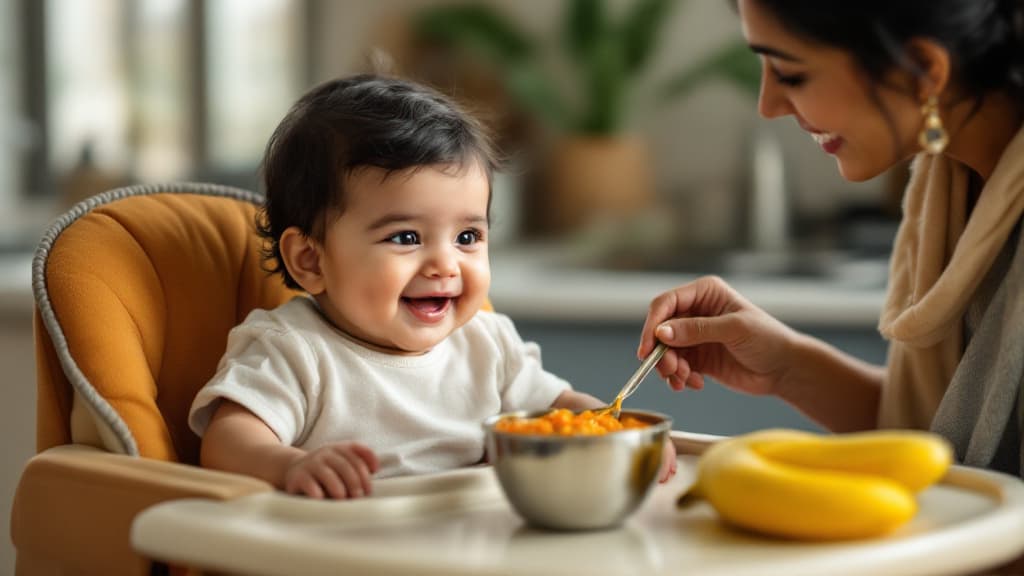
For Indian babies, traditional first foods work beautifully. Start with single-ingredient purees that are easy to digest. Good first choices: moong dal water (thin), rice water (kanji), mashed banana, steamed and pureed apple, carrot, or sweet potato.
Avoid honey (botulism risk), salt, sugar, and cow's milk as a main drink before 1 year. No whole nuts. No choking hazards like grapes or raw carrots.
Baby-Led Weaning vs Purees
Puree-first is traditional and gentler on the digestive system. Baby-Led Weaning (BLW) skips purees entirely — you offer soft finger foods from the start, letting baby self-feed. Research shows both approaches lead to similar outcomes; BLW may develop a broader palate. Many parents combine both (responsive feeding).
💡 Baby Express Essentials for Starting Solids
Nuby silicone suction bowl (₹399), Pigeon soft-tip spoon set (₹299), Bumbo floor seat with tray (₹1,899), and the Philips AVENT baby food maker for steaming and blending in one (₹3,499).
Introducing Allergens Early
Current guidelines recommend introducing the top 8 allergens (milk, egg, peanut, tree nuts, wheat, soy, fish, shellfish) early — from 6 months — to actually reduce allergy risk. Introduce one new food every 3–5 days and watch for reactions: hives, vomiting, swelling, or difficulty breathing. Mild reactions can be managed; severe reactions need emergency care.